Tag: injury

  • 4 Ways Acupuncture Helps Overcome Physical Barriers to Weight Loss

    4 Ways Acupuncture Helps Overcome Physical Barriers to Weight Loss

    acupuncture for pain

    This week we’re talking about 4 ways acupuncture helps overcome physical barriers to weight loss.

    When we talk about weight loss we often discuss mental and emotional limitations. Those are such important hurdles to leap, but for other groups of Americans the issues can seem physically insurmountable. Does acupuncture help people with limited physical ability? How does that help them lose weight? And do you fit into one of these groups? Let’s jump in and find out.

    I have chronic pain.

    Chronic pain is a serious issue for a surprising number of people. According to the Institute of Medicine of the National Academies, over 100 million Americans suffer from chronic pain in some form. That’s almost 1 in 3 Americans, a third of the country! Whether your pain is work related, age related, or it’s been around for as long as you can remember, this is a major problem. Just think of all the hours of solid work lost, family events missed and sleepless nights suffered, all over chronic pain. When you consider how an active life and good sleep all contribute to weight loss, the case for weight gain due to pain begins to add up.

    I have an injury.

    Pain from injury is unfortunately all too common. One of the more frequent injuries we hear about are back injuries. The American Chiropractic Association estimates that lower back pain alone afflicts approximately 31 million Americans. We need to be active in order to help manage our weight effectively  Since the back is such a crucial juncture in our bodies we need to make sure it’s pain free so we can do everything that keeps us fighting fit.

    That goes for sports injuries, too. Athletes often maintain high calorie diets so they can feed the machine that gives them great performance. Without all that physical activity to balance out their diets, that high metabolism can slow down leaving a heavy eater with nothing but constant hunger. So overcoming sports injuries are critical to managing weight.

    I have age-related limitations.

    It’s a fact: we all get older. It’s important as we age to assess our physical abilities and adapt our exercise and activity to keep us as strong as possible both inside and out. Joint pain, limited mobility, possible repercussions from surgery and a host of other issues can make weight loss seem like a faraway dream. In fact, the CDC reports that as of the period 2007-2010 about 13 million Americans aged 65 and older were considered obese. That’s an extraordinary number of people requiring extra care in large part because they can’t manage their weight.

    I have a physical disability.

    Physical disabilities come in a range of types and severity, from temporary to permanent, from sudden to lifelong. When they occur, there’s no simple handbook for how to live with them. But one thing is for sure — people with physical disabilities need a plan.

    According to the National Health and Nutrition Examination Survey reported by the CDC in 2010, up to 38% of disabled adults suffer from obesity. This causes all kinds of additional complications like needing increased physical assistance, poor heart health, high blood pressure and more.

    Here’s how Acupuncture helps overcome physical barriers to weight loss.

    Acupuncture for Chronic Pain

    First off, let’s talk about chronic pain. Acupuncture has been shown to help relieve chronic pain substantially. In 2013 Daniel Pendick of Harvard University’s Men’s Health Watch reported on a study of 18,000 participants who received acupuncture for pain. That study showed an overall reduction in pain of 50%. In it, he quotes Massachusetts General Hospital anesthesiologist Dr. Lucy Chen, who said:

    “I think the benefit of acupuncture is clear, and the complications and potential adverse effects of acupuncture are low compared with medication.”

    This shows that it’s possible to manage pain with acupuncture, allowing patients to return to active lives where weight management is finally possible.

    Acupuncture for Injury

    Injuries come in many shapes and forms, so thankfully acupuncture is a precise art that lets us find the most effective way to stimulate healing. In the East, acupuncture is said to release the flow of energy through an area of the body that lets it heal itself. In the West, we might put it in terms that all medical experts can understand and agree on. For example, acupuncture stimulates muscles and signals various glands and joints to release to allow more flexibility and sustain activity. This is key to weight loss. Pacific College gets into more specifics about how acupuncture helps overcome injury.

    Acupuncture for Age-Related Limitations

    Acupuncture specializes in getting the body to do what it naturally wants to do. Even if it doesn’t seem to be cooperating, the body’s design is constant like a high performance car that just needs a jumpstart. A thorough article over at Senior Living Blog talks about many ways that acupuncture helps seniors recover lost function and restore physical strength and dexterity. Suddenly going for a walk is completely possible, and some light stretching and weight lifting isn’t the herculean task it was. That means that weight loss is once again an attainable goal, helping you look and feel great, and maintaining overall health for years to come.

    Acupuncture for Disability

    Having a physical disability doesn’t have to be a sentence to gain weight the rest of your life. Research into how acupuncture benefits patients with physical disabilities is ongoing and is coming up with compelling results. The Healthcare Medicine Institute reports on findings that Chinese physicians see a combination of acupuncture with other treatments helps cerebral palsy patients. 200 patients with hyper rigid muscles were treated with acupuncture in addition to normal treatment. This increased the effective rate by 32%. That allowed 64 additional cerebral palsy patients to relax their muscles. That kind of treatment allows patients to receive physical therapies that reduce weight gain.

    Is pain preventing you from losing weight? Call 305-296-535 and book an appointment with Dr. Ashley Hoyt. Your free consultation can set you on the path to weight loss.

  • Mobilizing the Hip Joint

    mobilize hip joint

    This week, we feature a friend of Dr. Ashley Hoyt’s Key West Wellness Center, Dale Alexander.

    ____________________________________________________________________________________________

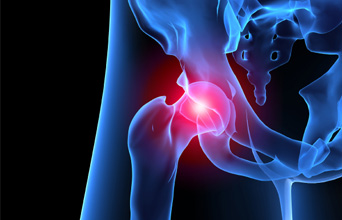
    The hip joint is most often characterized as a ball and socket joint. The problem with the human hip is that the head of the femur bone (the ball) very often slides backward and starts riding the edge of its socket. Over the years, this wears a flat spot into the normally spherical shape of the femoral head. Also, when this slide occurs, it pulls on the tendon of a crucial muscle that moves the thigh forward when we walk. Again, over many years, this compresses the artery that feeds the femoral head. 

    These brief descriptions are the two most common reasons that people end up getting a hip replacement, osteoarthritis and avascular necrosis. The motion within a healthy hip joint is characterized by its ability to “roll and spin.” When the femoral head slips backward, these normal motions become less. 

    What appears to have eluded many is that the other end of the femur bone is where the 

    nibby knobs interface with depressions in the bone of the tibia, the (femoral condyles) and the (tibial plateaus). Together these moving surfaces comprise the knee joint. Most often when the femoral head slides backward, it also twists. This twist is communicated down the length of the bone influencing the tracking function between the opposing surfaces of the knee joint. 

    How the knee works is to twist between these surfaces to unlock the joint allowing it to bend and the thigh and leg to move forward. Then as a person’s heel and foot come down and pushes off and forward, the nibby knobs need to have twisted back into their originally locked position for one to have power in their stride and “pep to their step.”

    As you might already imagine, if the entire femur bone is twisted from above, then the tracking of the knee joint will be affected. Compression and friction result. Arthritic changes are the outcome. Often calcium salts will build up and you both feel and hear the grinding within the knee joint. The same elements of compression and friction are what erode the hip joint’s function resulting in pain and loss of motion in either the knee or the hip.

    Sadly, women have almost double the number of knee replacements and slightly more hip replacements than men. This is usually explained by the fact that the female pelvis is wider to allow for childbirth, thus they have more of an angle between the two ends of the femur bone by the time they reach childbearing maturity.

    Nature simply has not been fair. It serves its purposes by selecting for physical traits that maximize its species ability to survive and thrive. 

    Early detection of hip or knee degeneration is essential. If you have a “hitch in your get a long” or pain while walking, you need to seek treatment and/or orthopedic evaluation.

    Please see Dr. Ashley Hoyt or myself. If we are unable to to assist you then we will refer you to a physician we trust.

    _________________________________________________________________________________________

    Dale G. Alexander Ph.D. L.M.T. has had a Clinical Massage Therapy practice in Key West, Fla. for 35 years now. In 1983 he was hit head-on by a drunken driver along the 18 mile stretch going south toward Key Largo at Jewfish Creek Bridge. Among many injuries, his right hip was shattered. Very soon after rehabilitating his injuries, clients began showing up in increasing numbers that had varying stages of hip, knee, and shoulder degeneration. Dale invites anyone who has a chronic problem with any of these joints to call him for a free consultation. You may access his published articles on this subject at www.massagetoday.com. Click on columnists, then on his name. And, visit his website, www.dale-alexander.com to review his extensive training history and to appreciate the broader scope of the people he has helped.


    If you have questions about how acupuncture can help heal your injuries, book an appointment with Dr. Ashley Hoyt today.