Author: Dr. Ashley Hoyt, A.P.

  • Water, Water Everywhere – Are You Drinking Enough? Part 1 of 2

    You may have heard the phrase “You are what you eat”, yet rarely does anyone say “You are what you drink”. It’s a very accurate statement as you are composed of 60% to 70% water. Water is second only to air in importance for life. Water is an essential cornerstone of Wellness. Drink up!

    The Importance of Drinking Water
    Drinking water, either plain or in the form of other fluids or foods is essential to your health. Your body depends on water to survive. Every cell, tissue, and organ in your body needs water to work properly. Your body uses water to maintain its temperature, remove waste, protect your brain, improve digestion, increase metabolism, rejuvenate the skin and lubricate your joints. Water is needed for overall good health and is the single most important nutrient for our bodies.
    If you don’t maintain a steady supply of water to your organs, tissues and cells, they cannot perform correctly and this can lead to
    illness and disease. Starting your day with water gives your body the hydration it needs after resting from the night before. Sleep is the time of renewal for our body, so by starting off the day with water helps our body work more effectively.
    Most individuals lose between 10 and 16 cups of water per day through sweat, urine, digestive waste, exhaling and direct evaporation from your skin. The loss of water through urination can be greatly increased by drinking caffeinated and alcoholic beverages. These drinks have a diuretic effect by stimulating the kidneys. You then lose more water and vitamins, calcium, magnesium, potassium, sodium, chloride and zinc.

    Water has successfully helped many diagnosed diseases, e.g., peptic ulcers, colitis, hypertension, rheumatoid arthritis, chronic back and neck pain, anxiety, depression, chronic fatigue, high cholesterol, asthma, allergies and diabetes, with just increased and regular intake of water.

    Path to Improved Wellness
    You should drink water every day. Over the years, you have been told you should drink 6 to 8, 8-ounce glasses of water each day. That is a reasonable goal. However, different people need different amounts of water to stay hydrated. Most healthy people can stay well hydrated by drinking water and other fluids whenever they feel thirsty. A good rule of thumb for those who do want to measure water intake, is to divide your weight (pounds) in half and drink that number of ounces each day. For example, if you weigh 200 pounds you should drink 100 ounces of water per day. Water is best for staying hydrated. Other drinks and foods can help you stay hydrated. Eating water-rich foods add to the amount of water you get each day. Even caffeinated drinks, coffee, tea, and soda can contribute to your daily water intake however, it’s best to limit caffeinated drinks as it may cause you to urinate more frequently.

    Sports drinks can be helpful if you are planning on exercising at higher than normal levels for more than an hour. It contains carbohydrates and electrolytes that can increase your energy and helps your body absorb water. However, some sports drinks are high in calories from added sugar and may contain high levels of sodium (salt). Energy drinks are not the same as sports drinks. Energy drinks usually contain large amounts of caffeine, sugar and contain ingredients that overstimulate you (guarana, ginseng, or taurine). These are things your body doesn’t need…

    Some of the Reasons for Dehydration
    Even though you know you need to drink plenty of water per day you may not consider situations when you will need more water than usual. People who engage in outdoor physical labor during the summer tend to lose two to three liters of water due to perspiration throughout the workday. It’s also important to note that both children and older adults are more prone to dehydration than healthy teens and adults. People with certain chronic health conditions, such as diabetes, kidney disease, and congestive heart failure are also at risk of dehydration. Older adults often don’t get enough fluids and risk becoming dehydrated, especially during summer when it’s hotter and they perspire more. Older people don’t sense thirst as much as they did when they were younger and that could be a problem if they’re on a medication that may cause fluid loss, such as a diuretic. Which is why it is best to discuss the amount of ounces of water needed per day with the prescribing physician.

    How to Stay Hydrated
    The best way to ensure you stay hydrated is to make water the beverage you drink most often. While excessive consumption is possible, it is very difficult to drink too much water. By making sure you stay hydrated, you’ll feel sharper, perform better, have more energy, get more done, and give your body what it needs to help ensure better health. Not sure on just how much you need? keep a daily log of food and drink intake, makes notes on how you feel on each of these days. This way your log is available the next time you meet with your family physician.

  • How Summer Can Affect Your Skin….


    Summer is here! And oh what a joy summer brings, the longer days, sunny skies. Time to hit the water and bask in the sun? Well, here is how summer can affect your hair and skin.

    Sun, sand, poolside fun—despite the fact that it no longer means two months off from school, summer is certainly a glorious time. Unpleasant as it may be, we still need to be aware of the negative effects that summer weather and activities can have on our skin and hair, and we don’t just mean piling on the SPF. Consider these variables and take necessary precautions, and you’ll have no problem getting through summer unscathed.

    Sun
    Sun isn’t quite the mortal enemy it’s sometimes made out to be (vitamin D, please!), but you certainly do need to make a strong effort to protect yourself against its damaging effects. It’s not the first time you’ve heard this, but sunscreen is a must. The higher the SPF the better, but the most important thing is that you reapply frequently, at least once every two or as directions state on the bottle. Reapplication is the only thing that stands between you and a killer sunburn and resultant sun damage. Exposure to harsh sunlight is also damaging to your scalp—yes, your scalp can get burnt, too—and can wreak havoc on colored hair. We love a good sun hat look, but we also recommend applying a scalp and hair-protectant.  Your local drug store or grocery store will carry an SPF spray for your hair. Such as Clarins SPF 30 Dry Oil Sunblock for hair and body as an example.

    Salt Water
    As you’ve probably gleaned from the abundance of sea salt sprays on the market, salt water isn’t all bad. In fact, it can be really beneficial for your skin—it helps to open pores and remove toxins, thereby sterilizing wounds and soothing skin irritations like itchiness and eczema, but lying in the ocean for too long can also exacerbate dryness, especially if you don’t replenish moisture afterward. Your hair can also take a real beating from overexposure, resulting in serious dehydration, dullness, and tangles. Saturating hair in a leave-in conditioner before you take a dip can help to ward off damage by filling the hair’s cuticle, preventing it from absorbing too much salt water, and always be sure to hit the shower after the beach for a thorough shampooing and deep conditioning treatment.

    Chlorine
    Kind of like salt water, chlorinated water can be incredibly drying and irritating… without the beneficial properties of salt water. Consider that chlorine is used in pools to disinfect and kill bacteria, and its harmful effects start to make a little more sense. As such, it completely strips your skin and hair.  For your hair, you can coat it in tap water or leave-in conditioner prior to heading into the pool to create a barrier, but it’s important to also shampoo and condition afterward—if you can use a specialized shampoo meant to purge the hair of chlorine, even better. Bottle blondes beware: Everything you’ve heard about chlorine turning your hair green is true, so avoid submerging your head as much as possible. Chlorine can also be wildly drying to skin, even resulting in a rash, so head straight to the shower for a good rinse as soon as you can after getting out of the pool, and don’t forget to moisturize!

    For more information on overall wellness, please contact:
    Key West Wellness Center – Dr. Ashley Hoyt
    Your Clinic of Alternative Medicine, (305) 296-5358
    Contact@KeyWestWellnessCenter.com


  • What is Facial Rejuvenation Acupuncture?
    In Traditional Chinese Medicine Theory beauty comes from within. When you start to age in a way that looks and feels unhealthy then it is possible the flow of Qi is not balanced within your body. When balance is restored, you will feel and look more radiant. On a physiological level, acupuncture has been shown to increase circulation of blood and life energy throughout the body. Increased blood flow can help to maintain healthy skin and muscle tone by sending nourishment, moisture, and “lifting” energy to the skin and muscles of the face. By increasing lymph flow using facial massage and combined with acupuncture this process can help strengthen the immune system as our skin is an essential part of our immune system.
    Facial Rejuvenation Acupuncture is a painless, non-surgical method of reducing the signs of the aging process. Facial Rejuvenation Acupuncture can sometimes be referred to as Acupuncture Facelift and in much more than just a cosmetic procedure. It is a rejuvenation and revitalizing process designed to help the whole body look and feel younger.

    Hair-thin needles are inserted into particular areas of the face, ears, neck, hands, trunk, and legs along channels or meridians of energy called Qi. Specific points are chosen to manipulate the movement of energy in the body according to the individual’s needs. Thousands of years ago, the Chinese discovered that many meridians either begin or end on the face while some have internal branches that go to the face. Thus, practitioners of Facial Rejuvenation Acupuncture know how to specifically treat the face while simultaneously treating the underlying factors that contribute to the aging process.

    Facial Rejuvenation Acupuncture may erase as many as five to fifteen years from the face, with results apparent after just a few treatments. Fine lines may be entirely eliminated and deeper wrinkles diminished. Bags under the eyes can be reduced, jowls firmed, puffiness eliminated, droopy eyelids lifted and double chins minimized. Other likely results include: moisturizing of the skin with increased local circulation of blood and lymph to the face; increased collagen and elastin production, muscle tone, and dermal contraction; tightening of the pores; brightening of the eyes; improving of hormonal balance to help acne; reduction of stress evident in the face – bringing out the innate Beauty and Radiance of an individual.

    Course of Treatment

    The recommended course of treatment (for the longest lasting and most dramatic effect) consists of 10 to 12 bi-weekly or tri-weekly treatments. You can expect an initial visit and following treatments to each last about 1 hour. The effects become most noticeable and lasting on or about the seventh session. Each person responds differently, depending on his or her condition and lifestyle prior to treatment.

    Following the initial course of treatment, maintenance sessions can prolong the results for five to ten years. It is often recommended to supplement the Facial Rejuvenation program with Facial Self-Massage and/or Acupressure, and a healthy diet.

    Microcurrent Facial Rejuvenation
    Microcurrent is a pleasant and refreshing way to help the body naturally fight and 
decrease the effects of aging on the face. This treatment uses a micro current unit to stimulate the muscles of the face to help relax tight muscles, firm muscles that have lost their tone, improve skin tone and circulation, and reduce or eliminate puffiness and fine lines. There is a slight risk of bruising and no recovery time after the treatment. A great alternative to other medical youth enhancing 
treatments like Botox, Collagen or Restalyne injections!

    Clients are also encouraged to come in for a Microcurrent Facial Rejuvenation 
treatment as a preparation for any big event or occasion! With no bruising or recovery time it makes a great addition to any beauty regimen!

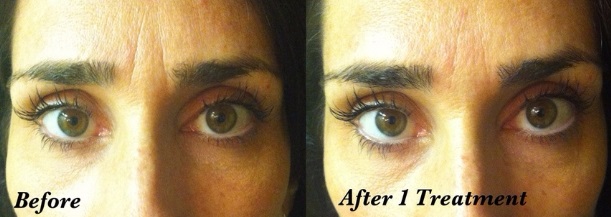
    In the Before & After Photo, notice the furrow wrinkle (between the eyebrows) is flattened and smoothed out

    tremendously after only one treatment.

    Consultations
    If you have more questions or concerns about Facial Rejuvenation Acupuncture, please feel free to call for a FREE consultation with Dr. Ashley Hoyt. She will go over the treatment protocol in detail with you and discuss your treatment scheduling and costs. Contact us at Key West Wellness center at 305-296-5358 or email contact@KeyWestWellnessCenter.com

    Circle us at Google+ and follow our pins on Pinterest
    Find us online at www.KeyWestWellnessCenter.com
    Find us on Facebook at www.facebook.com/KeyWestWellnessCenter