Category: Guest Blogs

  • Chronic Pain Is Real. Break The Cycle !

    Chronic Pain Awareness Key West Wellness Center

    “Chronic pain in the muscles and joints can make life miserable.” Says Daniel Pendick, Former Executive Editor, Harvard Men’s Health Watch. He continues to say “Standard treatments like ice and heat, anti-inflammatory medications, physical therapy, and appropriate exercises can often ease the pain. But when they don’t, acupuncture is an option with a good track record that’s worth considering.

    Over the years there has been substantial debate about whether acupuncture really works for chronic pain. Research from an international team of experts adds to the evidence that it does provide real relief from common forms of pain. The team pooled the results of 29 studies involving nearly 18,000 participants. Some had acupuncture, some had “sham” acupuncture, and some didn’t have acupuncture at all.” Overall, acupuncture relieved pain by about 50% with ongoing treatment in a short amount of time. The results were published in Archives of Internal Medicine. “The study isn’t the last word on the issue, but it is one of the best quality studies to date and has made an impression. “Says Pendick

    “I think the benefit of acupuncture is clear, and the complications and potential adverse effects of acupuncture are low compared with medication,” says Dr. Lucy Chen, a board-certified anesthesiologist, specialist in pain medicine, and practicing acupuncturist at Harvard-affiliated Massachusetts General Hospital.

    “Opioids and NSAIDs do not work for everyone and have unacceptable side effects, particularly when used over a long period of time,” said Nigel Bunnett, a professor of surgery and pharmacology at Columbia University Medical Center in New York.

    How does it work?
    “Acupuncturists insert hair-thin needles into the skin at specific points around the body. It is virtually painless when done by an experienced practitioner. Inserting the needles corrects imbalances in the flow of energy in the body, called qi (pronounced “chee”). In Western scientific terms acupuncture is thought to ease pain by affecting neurotransmitters, hormone levels and/or the immune system.” Says Pendick
    For new pain, an acupuncturist should not always be your first stop. Dr. Chen recommends that individuals have clear diagnoses of what is causing their pain to rule out serious medical conditions that should be treated right away—and then seek out acupuncture.

    What defines chronic pain?
    The Institute for Chronic Pain defines the condition as pain that lasts longer than 6 months. Sometimes chronic pain stems from an illness or injury and sometimes it comes with additional symptoms, which may escalate it to a chronic pain syndrome. The National Institute of Neurological Disorders and Stroke (NINDS) explains the condition like this:
    While acute pain is a normal sensation triggered in the nervous system to alert you to possible injury and the need to take care of yourself, chronic pain is different. Chronic pain persists. Pain signals keep firing in the nervous system for weeks, months, even years. There may have been an initial mishap — sprained back, serious infection, or there may be an ongoing cause of pain — arthritis, cancer, ear infection, but some people suffer chronic pain in the absence of any past injury or evidence of body damage.
    Because chronic pain can cause additional symptoms like loss of sleep or elevated levels of stress, it can create a vicious circle of pain for those who suffer with the problem.

    Seeking help from a provider
    Acupuncture treatment and various types of massage therapy help relieve tension and stress, aids in easing muscle and joint pain, improves sleep and provides many other benefits that can help alleviate the symptoms of chronic pain. If you have chronic pain, be sure to talk to your acupuncturist or massage therapist about your condition to ensure that you receive treatment that helps improve your symptoms and doesn’t aggravate them. Your therapist should go through a thorough intake process to help understand your condition and the accompanying symptoms.
    Practitioners will likely tailor their approach to your health condition, taking into account other information like whether any flare-ups have occurred. Always during treatment, whether you suffer from chronic pain or not, communicate with your therapist if something increases your pain or just doesn’t feel right. Let any other medical practitioners you see know about any acupuncture, massage or other natural therapies you are using to treat your condition.

    Source: Former Executive Editor,Daniel Pendick of Harvard Men’s Health Watch. Emmanuel Rodriguez, LMT of Acupuncture and Massage College, Inc. Christopher Wanjek of Live Science.

    Key West Wellness Center – Dr. Ashley Hoyt
    3420 Duck Ave.
    1 (305) 296-5358
    Contact@KeyWestWellnessCenter.com
    www.KeyWestWellnessCenter.com


  • Mobilizing the Hip Joint

    mobilize hip joint

    This week, we feature a friend of Dr. Ashley Hoyt’s Key West Wellness Center, Dale Alexander.

    ____________________________________________________________________________________________

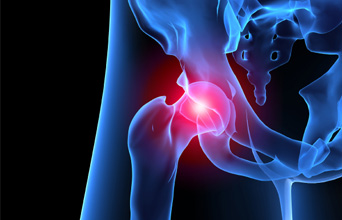
    The hip joint is most often characterized as a ball and socket joint. The problem with the human hip is that the head of the femur bone (the ball) very often slides backward and starts riding the edge of its socket. Over the years, this wears a flat spot into the normally spherical shape of the femoral head. Also, when this slide occurs, it pulls on the tendon of a crucial muscle that moves the thigh forward when we walk. Again, over many years, this compresses the artery that feeds the femoral head. 

    These brief descriptions are the two most common reasons that people end up getting a hip replacement, osteoarthritis and avascular necrosis. The motion within a healthy hip joint is characterized by its ability to “roll and spin.” When the femoral head slips backward, these normal motions become less. 

    What appears to have eluded many is that the other end of the femur bone is where the 

    nibby knobs interface with depressions in the bone of the tibia, the (femoral condyles) and the (tibial plateaus). Together these moving surfaces comprise the knee joint. Most often when the femoral head slides backward, it also twists. This twist is communicated down the length of the bone influencing the tracking function between the opposing surfaces of the knee joint. 

    How the knee works is to twist between these surfaces to unlock the joint allowing it to bend and the thigh and leg to move forward. Then as a person’s heel and foot come down and pushes off and forward, the nibby knobs need to have twisted back into their originally locked position for one to have power in their stride and “pep to their step.”

    As you might already imagine, if the entire femur bone is twisted from above, then the tracking of the knee joint will be affected. Compression and friction result. Arthritic changes are the outcome. Often calcium salts will build up and you both feel and hear the grinding within the knee joint. The same elements of compression and friction are what erode the hip joint’s function resulting in pain and loss of motion in either the knee or the hip.

    Sadly, women have almost double the number of knee replacements and slightly more hip replacements than men. This is usually explained by the fact that the female pelvis is wider to allow for childbirth, thus they have more of an angle between the two ends of the femur bone by the time they reach childbearing maturity.

    Nature simply has not been fair. It serves its purposes by selecting for physical traits that maximize its species ability to survive and thrive. 

    Early detection of hip or knee degeneration is essential. If you have a “hitch in your get a long” or pain while walking, you need to seek treatment and/or orthopedic evaluation.

    Please see Dr. Ashley Hoyt or myself. If we are unable to to assist you then we will refer you to a physician we trust.

    _________________________________________________________________________________________

    Dale G. Alexander Ph.D. L.M.T. has had a Clinical Massage Therapy practice in Key West, Fla. for 35 years now. In 1983 he was hit head-on by a drunken driver along the 18 mile stretch going south toward Key Largo at Jewfish Creek Bridge. Among many injuries, his right hip was shattered. Very soon after rehabilitating his injuries, clients began showing up in increasing numbers that had varying stages of hip, knee, and shoulder degeneration. Dale invites anyone who has a chronic problem with any of these joints to call him for a free consultation. You may access his published articles on this subject at www.massagetoday.com. Click on columnists, then on his name. And, visit his website, www.dale-alexander.com to review his extensive training history and to appreciate the broader scope of the people he has helped.


    If you have questions about how acupuncture can help heal your injuries, book an appointment with Dr. Ashley Hoyt today.

  • January Guest: Helen Basinger, Quit Smoking Author

    January Guest: Helen Basinger, Quit Smoking Author

    As part of our guest blogging sessions for 2015, we invited Helen Basinger, the author of ‘Quit Smoking Now and Forever, Conquering the Nicotine Demon‘ to offer her pointers on how to beat addiction in 2015. Here she is and a big thank you to Helen for being the first guest blogger! If you would like to submit an article to the Clinic’s website please add a comment below, thanks.

    Dr Ashley

    helen basinger Guest blogger Helen Basinger

    Happy New Year and thanks to Dr Ashley and the Clinic for the opportunity to write a little blog. I know you may not smoke yourself but hopefully the following article can help people you love. Certainly, if quitting smoking is always your New Year’s resolution then you need to read on.

    I am a hypnosis, Tapping and smoking cessation expert who has helped hundreds of people quit, and sadly it’s not as easy as just saying, “I’m quitting.” Just hoping all will be well on the morning of January 1st is not going to be enough. Did it work, or are you still smoking? You need a plan. A really good plan.

    Cigarette manufacturers have added almost 600 things to tobacco to keep you addicted. Not the least of which is ammonia which means you are literally freebasing nicotine like crack! As this nicotine wears off it makes you feel nervous and miserable and having another cigarette then seems like the only solution.

    It’s not though. There are many things you can do; from hypnosis to yogic breathing, herbs, patches, vitamins, homeopathic medicine and of course acupuncture.

    If you really want to be smoke free in 2015 you may like to buy my book “Quit Smoking Now and Forever! – Releasing the nicotine demon”. Not just a book, it also gives you access to a hypnosis session online, 3 Tapping session videos and 7 powerful audio visualizations.  This all combines to support you in really quitting. It’s worth a look if you really want to quit.

    quit smoking now and forever book

    Download the first chapters of the book for free

    The clinic of alternative medicine also offers acupuncture for quitting smoking and I am sure Dr Ashley will be very willing to help!

    Best wishes for 2015.

    Helen