Category: AcuGraph

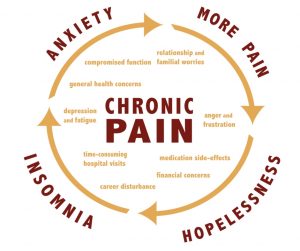
  • Chronic Pain Is Real. Break The Cycle !

    Chronic Pain Awareness Key West Wellness Center

    “Chronic pain in the muscles and joints can make life miserable.” Says Daniel Pendick, Former Executive Editor, Harvard Men’s Health Watch. He continues to say “Standard treatments like ice and heat, anti-inflammatory medications, physical therapy, and appropriate exercises can often ease the pain. But when they don’t, acupuncture is an option with a good track record that’s worth considering.

    Over the years there has been substantial debate about whether acupuncture really works for chronic pain. Research from an international team of experts adds to the evidence that it does provide real relief from common forms of pain. The team pooled the results of 29 studies involving nearly 18,000 participants. Some had acupuncture, some had “sham” acupuncture, and some didn’t have acupuncture at all.” Overall, acupuncture relieved pain by about 50% with ongoing treatment in a short amount of time. The results were published in Archives of Internal Medicine. “The study isn’t the last word on the issue, but it is one of the best quality studies to date and has made an impression. “Says Pendick

    “I think the benefit of acupuncture is clear, and the complications and potential adverse effects of acupuncture are low compared with medication,” says Dr. Lucy Chen, a board-certified anesthesiologist, specialist in pain medicine, and practicing acupuncturist at Harvard-affiliated Massachusetts General Hospital.

    “Opioids and NSAIDs do not work for everyone and have unacceptable side effects, particularly when used over a long period of time,” said Nigel Bunnett, a professor of surgery and pharmacology at Columbia University Medical Center in New York.

    How does it work?
    “Acupuncturists insert hair-thin needles into the skin at specific points around the body. It is virtually painless when done by an experienced practitioner. Inserting the needles corrects imbalances in the flow of energy in the body, called qi (pronounced “chee”). In Western scientific terms acupuncture is thought to ease pain by affecting neurotransmitters, hormone levels and/or the immune system.” Says Pendick
    For new pain, an acupuncturist should not always be your first stop. Dr. Chen recommends that individuals have clear diagnoses of what is causing their pain to rule out serious medical conditions that should be treated right away—and then seek out acupuncture.

    What defines chronic pain?
    The Institute for Chronic Pain defines the condition as pain that lasts longer than 6 months. Sometimes chronic pain stems from an illness or injury and sometimes it comes with additional symptoms, which may escalate it to a chronic pain syndrome. The National Institute of Neurological Disorders and Stroke (NINDS) explains the condition like this:
    While acute pain is a normal sensation triggered in the nervous system to alert you to possible injury and the need to take care of yourself, chronic pain is different. Chronic pain persists. Pain signals keep firing in the nervous system for weeks, months, even years. There may have been an initial mishap — sprained back, serious infection, or there may be an ongoing cause of pain — arthritis, cancer, ear infection, but some people suffer chronic pain in the absence of any past injury or evidence of body damage.
    Because chronic pain can cause additional symptoms like loss of sleep or elevated levels of stress, it can create a vicious circle of pain for those who suffer with the problem.

    Seeking help from a provider
    Acupuncture treatment and various types of massage therapy help relieve tension and stress, aids in easing muscle and joint pain, improves sleep and provides many other benefits that can help alleviate the symptoms of chronic pain. If you have chronic pain, be sure to talk to your acupuncturist or massage therapist about your condition to ensure that you receive treatment that helps improve your symptoms and doesn’t aggravate them. Your therapist should go through a thorough intake process to help understand your condition and the accompanying symptoms.
    Practitioners will likely tailor their approach to your health condition, taking into account other information like whether any flare-ups have occurred. Always during treatment, whether you suffer from chronic pain or not, communicate with your therapist if something increases your pain or just doesn’t feel right. Let any other medical practitioners you see know about any acupuncture, massage or other natural therapies you are using to treat your condition.

    Source: Former Executive Editor,Daniel Pendick of Harvard Men’s Health Watch. Emmanuel Rodriguez, LMT of Acupuncture and Massage College, Inc. Christopher Wanjek of Live Science.

    Key West Wellness Center – Dr. Ashley Hoyt
    3420 Duck Ave.
    1 (305) 296-5358
    Contact@KeyWestWellnessCenter.com
    www.KeyWestWellnessCenter.com

     

  • New Year, New You? “Ways to Build New Habits and Make Them Stick”

    Got a New Year’s Resolution? Or perhaps more than one?
    Here are some suggestive ways to build new habits and make them stick. 

    Good habits make all the difference in life. When you’ve created good habits you do the right thing, without even having to think about it. That is, you put the behavior that will allow you to achieve your goals on automatic pilot.
    Have some good habits in mind you would like to adopt? Here are some tips to build those habits and make them stick.

    Believe that You Can Build New Habits.
    The first step in building a new habit, or habits, is believing you can. You may have tried and failed several times in the past to create good habits such as exercising, becoming an early riser, and adopting a meditation practice. However, stop telling yourself it is impossible, especially by basing it on past failures. It is not that you don’t have the ability to build new habits, but that you’ve most likely approached the situation in a way that may not work for you and your day to day routine.
    Although it’s true that some people are naturally better at creating new habits than others, by following the right strategies everyone is capable of building habits and making them stick, yes…everyone.

    Start Tiny.
    Most of us get really ambitious when it comes to creating new habits. “A New Year a New Me” is the most popular phrase used when the month of January is soon approaching. Many will use the refreshment of a new year to attempt to achieve new goals.
    For example, a lot of people who haven’t exercised in years decide that they’re going to start walking on the treadmill for forty minutes, five days a week. However, this is setting the bar too high, that failure is almost guaranteed, not to mention this goal is physically unsafe. Certified personal trainers are educated on this, and on the process of slowly introducing new life habits and new exercise routines in order to make the goals achievable and safe to attempt.
    A much better strategy is to set the bar so low, that you practically trip over it. Make the decision to start walking on the treadmill for one minute a day. After a while you can raise the bar to two minutes a day, then three minutes, then four, and so on. It’ll take you a while to build up to forty minutes a day, but you’ll get there. For those who prefer the outdoors or a treadmill is not accessible to you, it is suggested to take a short five minute walk outside or a few small strolls a day and build up the time spent on these strolls after a week’s time.

    Be Specific.
    Almost everyone wants to adopt healthy eating habits. However, “healthy eating habits” is so general and ambiguous, that it’s unlikely to result in any concrete action being taken. Instead, you can decide that you’re going to start taking the specific actions. As an example, you may want to purchase healthier items while shopping, such as:
    Buying whole-grain pasta or whole grain bread.
    Buying 2% milk or a dairy alternative.
    Enjoy more fiber and fresh fruit by prepackaging healthier choices and take them with you when you start your day. Have trail mix as a mid-afternoon snack instead of getting a chocolate bar from the vending machine.

    Tailor this list to match your goals.
    The more specific you are as to what you’re going to do, the more likely it is that you’ll do it. And the more often you do it, the more likely it is to turn into a habit.

    Reduce Barriers. Sometimes there’s an action that we want to start taking on a regular basis, but when we think of taking the action, one or more barriers get in the way. For example, let’s say that you want to start riding your bike every morning in order to lose a few pounds. However, you store your bike in the garage and in order to get to it you have to move a few boxes out of the way.
    Having to move those boxes is a barrier. Even if it doesn’t take more than one or two minutes to get your bike out from behind the boxes, that’s enough of a barrier to reduce the likelihood that you’ll go out for a bike ride. Therefore, you need to find a way to make your bike as easy to reach as possible. Or perhaps the tires need to be serviced or the chain is loose, get the bike repaired!
    The fewer barriers that exist between you and your bike, the more likely it is that you’ll be able to turn bike riding into a habit.

    Tie It To a Trigger.
    Tie the action that you’re trying to turn into a habit to something that you’re already doing on a regular basis. For example, if you want to start following along with an exercise DVD five days a week, tie it to some action that you do on a daily basis, such as walking the kids to school. Do the following:
    As soon as you walk into the house after dropping the kids off–which is the trigger–, press “play” on the DVD player and get started, even if you move along to the moves on the screen only for a portion of the video. Slowly build up to the entire workout. Take as many breaks as needed, be sure to hydrate and find alternative positions if they are uncomfortable or could affect a past injury.
    Every day follow up the trigger with the new habit, without fail. This will create a bond between the trigger and the new habit.
    Sooner than you think, you won’t be able to do one without immediately afterwards doing the other.

    Reward Yourself.
    In his book, “The Power of Habit”, Charles Duhigg explains that there’s something called “the habit loop”. That is, every habit can be broken down into three components:
    The cue: The trigger to start the behavior that you want to turn into a habit.
    A routine: The actual behavior that you’re trying to turn into a habit.
    A reward: When you complete the action that you’re trying to automate, reward yourself.

    Duhigg explains that giving yourself a reward after performing the action that you’re trying to automate reinforces the habit loop in your brain, so the habit is more likely to stick. He goes on to say that research shows that the best way to get yourself to start exercising is to reward yourself with a piece of chocolate once you’re done. You can replace this with a chocolate protein shake or glass of chocolate almond milk or after a few weeks of committing to at least half of your routine, purchase that shirt you have been eyeing at the store or after a month book yourself a massage. The point is that the reward does not always have to be in the form of food.
    Eventually your brain will enjoy exercise for exercise’s sake. However, at first you have to trick your brain into creating the habit loop—that is, trick it to develop the neurological patterns of a habit– by giving yourself a reward after meeting a certain goal.

    Forgive Yourself If You Fall Off the Wagon.
    Picture this: you decide that you’re going to start having a fruit salad as a mid-afternoon snack at work instead of taking a donut from the coffee room. The first week, everything goes well. Every afternoon you take your fruit salad out of the fridge in the coffee room and walk triumphantly past the donuts.
    However, on Monday of the second week you succumb to temptation: you take a donut and you guiltily gulp it down. Afterwards you can’t stop berating yourself:
    I have no impulse control.
    I’ll never be able to change my eating habits. Why do I even try?
    However, studies show that beating yourself up when you fall off the wagon is counterproductive. Instead, you should be kind to yourself. Tell yourself that you’ve had a minor setback, but that this happens to everyone when they’re trying to build a new habit. Then, resolve to do better the next day.

    Build One Habit At a Time.
    Changing your behavior requires willpower, and willpower is a limited resource. That is, you simply do not have enough willpower to tackle several habits at once. Therefore, you should only try to build one habit at a time.
    Once the new habit is ingrained it no longer requires will power to be sustained, which means that you can get started on building a new habit.

    Conclusion
    For almost any goal that you set for yourself, you’re going to have to build one or more habits in order to achieve that goal.
    The good news is that there are strategies that you can follow in order to make it easier to build those habits.
    Apply some of the strategies explained above and have a Safe, Happy, HEALTHY, Successful New Year!

    For more information about acupuncture and achieving overall wellness, please contact: Key West Wellness Center – Dr. Ashley Hoyt, A.P. 3420 Duck Ave. Key West, FL 33040 Phone: 305-296-5358 Email: Contact@KeyWestWellnessCenter.com Website: www.KeyWestWellnessCenter.com

  • How Summer Can Affect Your Skin….


    Summer is here! And oh what a joy summer brings, the longer days, sunny skies. Time to hit the water and bask in the sun? Well, here is how summer can affect your hair and skin.

    Sun, sand, poolside fun—despite the fact that it no longer means two months off from school, summer is certainly a glorious time. Unpleasant as it may be, we still need to be aware of the negative effects that summer weather and activities can have on our skin and hair, and we don’t just mean piling on the SPF. Consider these variables and take necessary precautions, and you’ll have no problem getting through summer unscathed.

    Sun
    Sun isn’t quite the mortal enemy it’s sometimes made out to be (vitamin D, please!), but you certainly do need to make a strong effort to protect yourself against its damaging effects. It’s not the first time you’ve heard this, but sunscreen is a must. The higher the SPF the better, but the most important thing is that you reapply frequently, at least once every two or as directions state on the bottle. Reapplication is the only thing that stands between you and a killer sunburn and resultant sun damage. Exposure to harsh sunlight is also damaging to your scalp—yes, your scalp can get burnt, too—and can wreak havoc on colored hair. We love a good sun hat look, but we also recommend applying a scalp and hair-protectant.  Your local drug store or grocery store will carry an SPF spray for your hair. Such as Clarins SPF 30 Dry Oil Sunblock for hair and body as an example.

    Salt Water
    As you’ve probably gleaned from the abundance of sea salt sprays on the market, salt water isn’t all bad. In fact, it can be really beneficial for your skin—it helps to open pores and remove toxins, thereby sterilizing wounds and soothing skin irritations like itchiness and eczema, but lying in the ocean for too long can also exacerbate dryness, especially if you don’t replenish moisture afterward. Your hair can also take a real beating from overexposure, resulting in serious dehydration, dullness, and tangles. Saturating hair in a leave-in conditioner before you take a dip can help to ward off damage by filling the hair’s cuticle, preventing it from absorbing too much salt water, and always be sure to hit the shower after the beach for a thorough shampooing and deep conditioning treatment.

    Chlorine
    Kind of like salt water, chlorinated water can be incredibly drying and irritating… without the beneficial properties of salt water. Consider that chlorine is used in pools to disinfect and kill bacteria, and its harmful effects start to make a little more sense. As such, it completely strips your skin and hair.  For your hair, you can coat it in tap water or leave-in conditioner prior to heading into the pool to create a barrier, but it’s important to also shampoo and condition afterward—if you can use a specialized shampoo meant to purge the hair of chlorine, even better. Bottle blondes beware: Everything you’ve heard about chlorine turning your hair green is true, so avoid submerging your head as much as possible. Chlorine can also be wildly drying to skin, even resulting in a rash, so head straight to the shower for a good rinse as soon as you can after getting out of the pool, and don’t forget to moisturize!

    For more information on overall wellness, please contact:
    Key West Wellness Center – Dr. Ashley Hoyt
    Your Clinic of Alternative Medicine, (305) 296-5358
    Contact@KeyWestWellnessCenter.com